
Practical Uses Sometimes Outweigh Honorees
Trying to discuss today’s most famous memorial buildings in the United States brings up an intriguing question that may be the sign of a bit of social problem that has gone all-but unnoticed in the country for decades: Memorial statues and monuments abound throughout the nation, and the purpose of those structures is usually self-evident, even from the name. But what about all these buildings that are known simply as “memorial” buildings? What exactly are they memorializing? And does anyone care?
The answers to those questions, it seems, would be “Who knows?” and “No.”
And that leads to an even more troubling question:
Can the myriad of memorial buildings in the United States be said to count a single “famous” memorial building one in their number.
Arguably – and sadly – that answer is no.
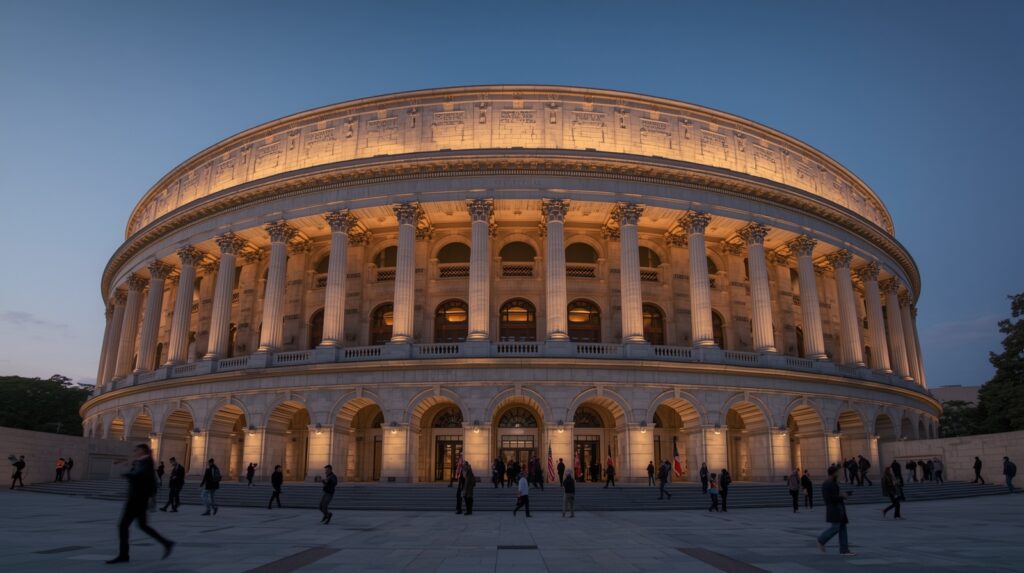
The most famous memorial building in the United States today may just be Memorial Coliseum in Los Angeles, California. That spot has been legendary as the home of countless famous sporting events over the years. But, as a memorial, it is sadly lacking. The building was erected in 1922 with the intention of it serving as a memorial to all veterans of the recently-ended World War I. And, since that war was supposed to be The War to End All Wars, it only made sense to not attach a name to the particular memorial.
But, as time pressed on, so did wars. And, finally, in 1968 – at least 3 wars – Los Angeles leaders “re-dedicated” the memorial to veterans of all wars. What “re-dedication” means, exactly, is unclear – except that today’s various bronze plaques and other literature on the memorial stadium grounds now make reference to all veterans.
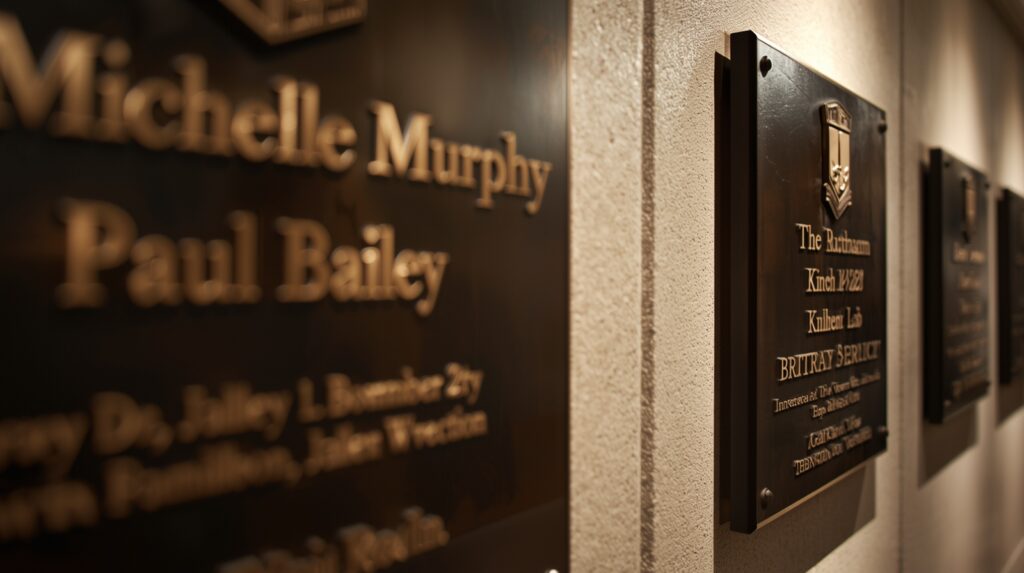
The result is that, should you ask the average young attendee of a Memorial Coliseum sporting event what, exactly the building memorializes, you will likely get a blank stare.
The same scenario holds true for thousands of Memorial Highways, Memorial Stadiums, Memorial Halls, Memorial Auditoriums, Memorial Post Offices, and even Memorial High Schools across America. What exactly are these places memorializing? Most modern users are probably not sure.
Could it be that planners and developers across the country have been too vague for their own (and the public’s) good?
The practice of turning buildings into memorials came into widespread practice in the United States in about the middle of the 20th century and it continues today. Before then, Americans – as societies have done for centuries – devoted large numbers of resources to huge memorial statues (as opposed to memorial buildings) that leave no question about their namesake. The Lincoln Memorial , for example, is not exactly the most practical of buildings. But there is no doubt that it will always be one of the most famous memorial buildings in U.S. History. And, because of it, it’s certain that children even 300 years from now will know the story of President Lincoln. For those interested in learning how to properly honor a loved one today, including cremated remains, see A Guide to Hosting a Memorial for Cremation.
The same cannot be said with certainly, unfortunately, for the veterans of World War I (or any other war for that matter) because most of the famous memorial buildings do little to single out their great conflict choosing, rather, to almost trivialize it by including it, almost with an asterisk, with all of history’s other wars.